
Get Clear on What You're Actually Building Before Starting Your Business
Get Clear on What You're Actually Building Before Starting Your Business
So you've decided you want to start a business. Amazing! You're excited. You're motivated. And if you're anything like I was when I first started, you're probably already thinking about business names, logos, and what color your website should be.
Stop right there.
I'm going to save you months of wasted time, thousands of dollars, and a whole lot of heartache by telling you something I wish someone had told me when I left K-12 education and started my entrepreneurial journey: none of that stuff matters if you don't know what you're actually building.
And I mean really know—not just "I think this would be cool" or "my friend said this was a good idea" or "I saw someone doing this on Instagram and they seem successful."
Here's the truth: getting clear on what you're building is the unsexy, unglamorous, absolutely critical first step that most people skip. And it's exactly why so many businesses fail before they even really start.
Let me show you how to do this right.
Why Getting Clear Matters More Than You Think
When I founded my youth mental health nonprofit over a decade ago, I had passion. I had a mission. I had a vision of the impact I wanted to make. What I didn't have? A clear understanding of exactly who I was serving, what specific problem I was solving, and how my solution was different from everything else out there.
I figured it out eventually—but I did it the hard way, through trial, error, and a lot of late nights wondering if I'd made a huge mistake.
Here's what I've learned since then: Niche research is not a one-time activity, but a continuous process of finding and validating profitable opportunities in the ever-changing online market. And in 2026 and beyond, it requires creativity, data analysis, and actual customer feedback—not just gut feelings.
Getting clear on what you're building helps you:
- •Stop wasting time and money on things that don't matter
- •Attract the right customers who actually need what you're offering
- •Stand out in a crowded market
- •Make better decisions about everything from pricing to marketing
- •Actually make money instead of just having a hobby
So let's break down exactly how to get clear on your business idea.
Step 1: Start With the Problem, Not the Solution
This is where most people get it backwards.
They start with "I want to sell handmade jewelry" or "I'm going to start a coaching business" or "I'm going to create online courses."
Cool. But why? What problem does that solve? For whom?
You can identify your customers' needs and problems by conducting market research to find out more about your customer's buying behaviors. This helps you understand what brands they've supported in the past, how often they buy these products or services, and their opinions on them.
Here's how to flip the script:
Instead of: "I want to sell meal prep containers"
Ask yourself: "Who struggles with meal prep and why? What makes current solutions frustrating?"
Instead of: "I want to be a business coach"
Ask yourself: "What specific business challenge do I help solve? For which type of business owner?"
Instead of: "I want to create printables"
Ask yourself: "What daily problem do these printables solve? For which specific group of people?"
The problem you're solving needs to be:
- •Real — people actually experience this issue regularly
- •Painful enough — they're actively looking for solutions
- •Specific — not just "I help people be happier" but "I help working moms manage their mental load through specific organizational systems"
My Story: When I launched my first online business, I made the mistake of thinking "I help women entrepreneurs" was specific enough. It wasn't. Once I got clear that I was specifically helping women who were overwhelmed by all the tech and tools and needed someone to cut through the noise and tell them what actually worked—that's when things clicked.
Step 2: Get Obsessed With Your Ideal Customer
You cannot build a successful business if you're trying to serve everyone.
I know it feels scary to narrow down. I know you think "but I don't want to exclude anyone!" Trust me on this—when you have a niche business that you're passionate about, it will be easier to identify your target customers and build your brand.
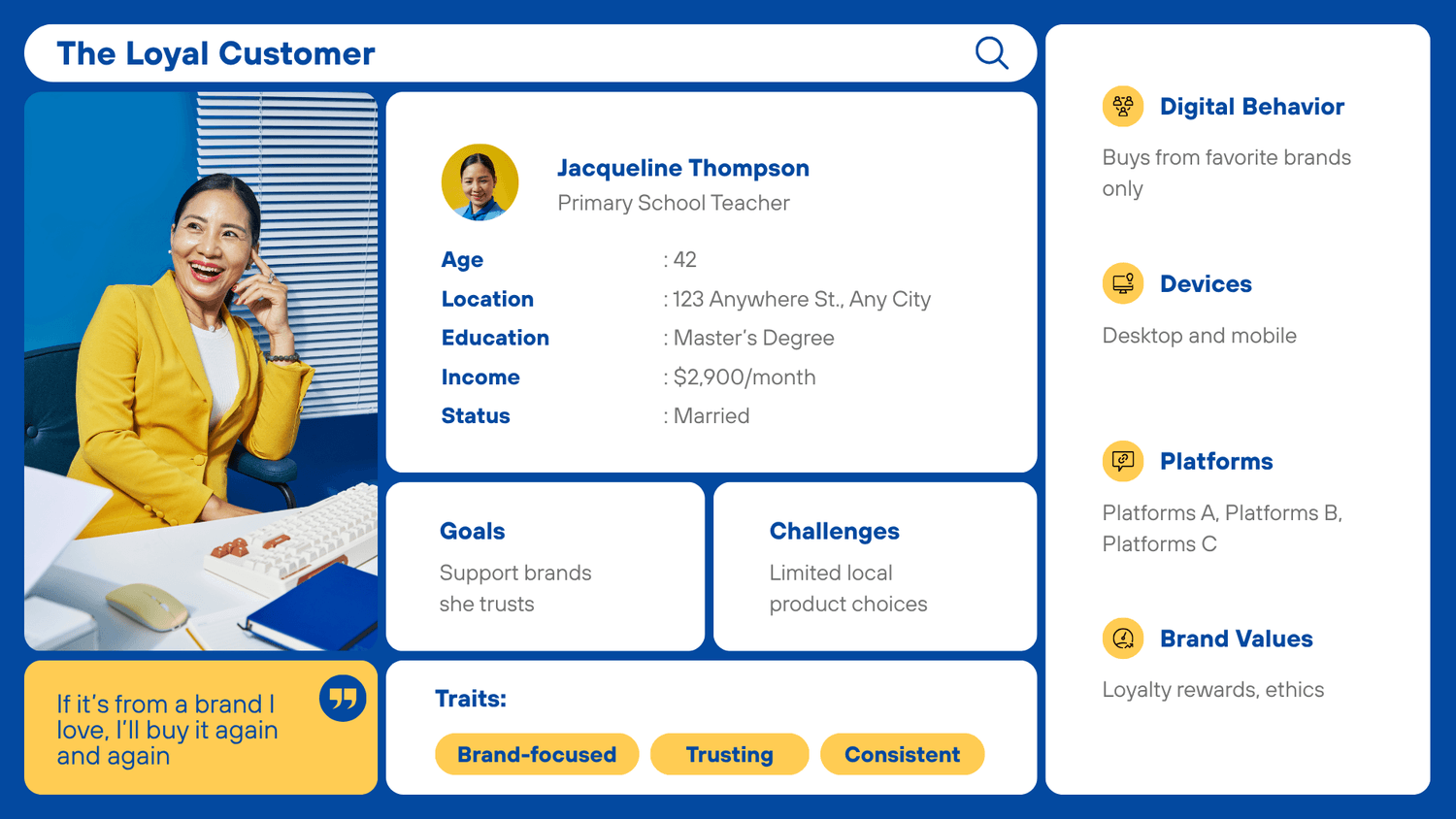
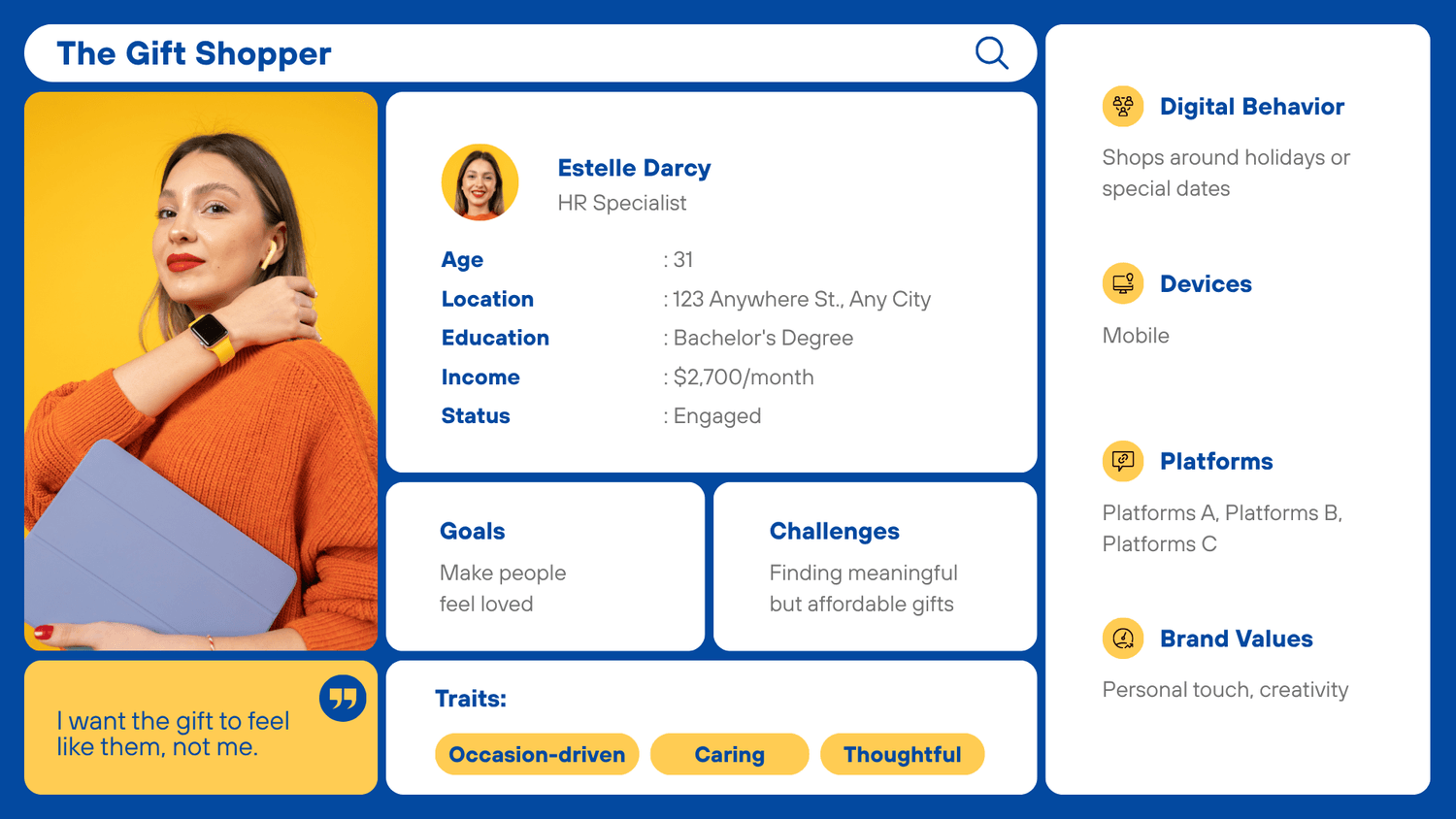
You need to paint a detailed picture of your ideal customer. And I mean detailed:
Demographics:
- •Age range
- •Gender identity
- •Location
- •Income level
- •Education level
- •Family situation
Psychographics (this is the good stuff):
- •What keeps them up at night?
- •What are they struggling with right now?
- •What have they already tried that didn't work?
- •What do they value most?
- •What are their goals?
- •What are their fears?
- •Where do they hang out online?
- •What influences their buying decisions?
For example, let's say you want to help teachers transition out of the classroom. Your ideal customer might be:
Sarah is a 32-year-old elementary school teacher who's been in education for 8 years. She loves kids but is burned out by the system. She's scrolling Pinterest and teacher Instagram accounts at night dreaming about what else she could do. She has a mortgage and can't just quit, so she needs to figure out a side hustle first. She's overwhelmed by all the options and doesn't know where to start. She values flexibility, creativity, and making a difference. She's afraid of failing and proving everyone right who said she should just stay in teaching.
See how much more clear that is than "teachers who want to leave"?
When you know your ideal customer this well, every decision becomes easier. You know what to write in your social media posts. You know what products to create. You know what language to use on your website.
Step 3: Do Real Market Research (Not Just Googling)
Okay, so you have a problem and you know who has that problem. Now you need to make sure:
- •Enough people have this problem to sustain a business
- •They're actually willing to pay to solve it
- •There's a way for you to reach them
This is where market research comes in. And no, I don't mean paying thousands for a fancy report. I mean rolling up your sleeves and doing the work—with some smart tools to help you.
Use Perplexity AI for Deep Market Research
Here's a game-changer I wish I'd had when I started: Perplexity AI. This tool has revolutionized how I do market research, and it's about to do the same for you.
Unlike regular ChatGPT or Claude, Perplexity searches the web in real-time and gives you current, cited information with sources. It's like having a research assistant who actually knows what's happening RIGHT NOW in your market.
How to Use Perplexity AI for Market Research:
Ask specific questions like: "What are the top pain points for new moms returning to work in 2026?" or "What are people saying about online business coaching on Reddit and Twitter?" Perplexity will search current sources and give you real, recent data with links to verify.
Perplexity AI queries you should run:
- •"What are the top competitors for [your business idea] in 2026?"
- •"What are people complaining about regarding [your industry] on social media?"
- •"What are the latest trends in [your niche] for 2026-2027?"
- •"How much are people willing to pay for [your solution]?"
- •"What marketing strategies are working for [similar businesses] right now?"
For example, if you're thinking about starting a business helping moms with postpartum anxiety, you could ask Perplexity: "What are the most common challenges new moms face with postpartum anxiety in 2026?" and get current, sourced answers instantly.
Use Google Trends and Keyword Research
After you've used Perplexity AI to understand the landscape, you can use keyword research tools like Moz to look up monthly search volumes. Input the search terms you expect would lead people to your product and find out exactly what kind of volume's involved.
If you're seeing thousands of monthly searches? There's demand. If you're seeing 10 searches a month? That's a problem.
Stalk Your Competition (Respectfully)
You need to research your competition. A competitor analysis will help you assess your brand's strengths and weaknesses and how they differ from other businesses in your industry.
Pro tip: Ask Perplexity AI to "Find and analyze the top 5 competitors for [your business idea]" and it will give you a comprehensive breakdown with links.
Look for:
- •Who's already serving this market?
- •What are they charging?
- •What do their customers love about them? (Read reviews!)
- •What are customers complaining about? (This is GOLD—these are your opportunities)
- •Are they growing? Hiring? Raising money?
If you find zero competition, that's actually not great—it might mean there's no market. If you find tons of competition, don't panic. It means there's demand. You just need to find your angle.
Actually Talk to Real People
This is the part most people skip because it feels scary. But you should validate your hypothesis by actually talking to your target audience by interviewing people who fit your ICA (ideal customer avatar).
Prepare questions to ask:
- •Tell me about [the problem you're solving]
- •How are you currently dealing with this?
- •What's frustrating about current solutions?
- •If there was a magic wand solution, what would it look like?
- •Would you pay to solve this problem? How much?
You need to do at least 20-50 of these conversations. I know that sounds like a lot. Do it anyway.
When I was developing my resources for women entrepreneurs, I spent two months having coffee chats (virtual and in-person) with women in my target market. Those conversations completely changed what I was building—in the best way possible.
Check Social Media and Online Communities
Where does your ideal customer hang out? Facebook groups, Reddit communities, LinkedIn groups, Instagram hashtags, TikTok trends?
What are they talking about? What are they asking for help with? What are they complaining about?
Another Perplexity AI hack: Ask it "What are people saying about [your topic] on Reddit in 2026?" or "What are the trending discussions about [your niche] on TikTok?" Perplexity will search these platforms and give you real, current insights.
Social media platforms like Instagram, TikTok, Facebook, and Reddit offer valuable tools for market research and discovering your niche. You can use polls, surveys, and analytics to engage directly with your audience to gather feedback and identify emerging needs.
Step 4: Test Your Idea Before You Build It
Here's a secret that will save you thousands of dollars: test if people are willing to pay before making the actual product.
I cannot stress this enough. Do not spend months building a website, creating products, perfecting your branding, and then finally putting it out into the world to see if anyone wants it.
Test first. Build second.
Ways to test your idea with minimal investment:
Create a Simple Landing Page: Set up a one-page website that describes your product or service and has a "sign up for early access" or "join the waitlist" button. Drive some traffic to it through social media or a small ad budget ($50-100).
If people are signing up? You're onto something. If crickets? Back to the drawing board.
Run a Pre-Sale: This is my favorite validation method. Sell it before you fully build it. You're upfront that it's a pre-order or that you're launching in X weeks. You're gauging real demand. And if you only get 2 buyers when you need 20 to make it viable? You can refund them and thank them for the feedback. Better to learn that now than after you've invested months of your life.
Start With a Service Before a Product: If you're thinking about creating a course, start with one-on-one coaching or a group program. If you're thinking about selling meal prep containers, start by actually doing meal prep for people as a service.
This is called the "concierge MVP" approach. You learn what your customers actually need, you make money while you learn, you gather testimonials and case studies, and you validate demand before creating scalable products.
Use Social Media as Your Testing Ground: Post about your idea. Create content around it. See what resonates. Use Instagram stories polls. Ask questions. Share what you're thinking about building and gauge interest.
The data you gather from actual engagement is more valuable than anything you'll find in a market research report.
Step 5: Define Your Unique Value Proposition
Okay, so you've validated there's a problem, you know who has it, you've researched the market, and you've tested that people will actually pay for a solution.
Now you need to articulate why someone should buy from YOU instead of your competitors.
You need to have a unique benefit when it comes to your product compared to the competition.
Your unique value proposition should answer:
- •What problem do you solve?
- •For whom?
- •How is your solution different/better?
- •Why should they trust you?
For example:
Generic: "I help women start businesses"
Specific: "I help burned-out teachers transition out of the classroom and into profitable online businesses they can run from home—without tech overwhelm or needing to become an influencer"
See the difference?
Your unique value proposition might come from:
- •Your personal experience (you've been there, done that)
- •Your specific process or methodology
- •Your niche focus (you only serve one specific group)
- •Your delivery method (faster, easier, more personalized)
- •Your values (eco-friendly, socially conscious, etc.)
- •Your results (proven track record)
Common Mistakes I See (And Made Myself)
Mistake #1: Thinking your idea is too unique to need validation
"No one is doing this, so it must be a great idea!" Not necessarily. Sometimes no one is doing it because there's no market for it. Validate first.
Mistake #2: Only asking friends and family for feedback
They love you. They'll tell you it's a great idea even if it's terrible. Assuming positive feedback from friends and family counts as validation is a common myth you need to avoid.
Mistake #3: Assuming "if you build it, they will come"
They won't. You need to understand how you'll reach your customers BEFORE you build.
Mistake #4: Getting paralyzed by perfection
You don't need to have everything figured out before you start testing. Focus on solving real problems and providing value to your target audience, test your assumptions with minimum viable products (MVPs), and adapt based on the feedback and results you get.
Mistake #5: Skipping this step entirely
I get it. This part isn't fun. You want to jump to the exciting stuff—the branding, the website, the launch. But doing this foundational work will save you so much time, money, and heartache down the road.
Your Action Plan for Getting Clear
Okay, enough theory. Here's what you're actually going to DO:
Week 1: Problem and Customer
- ☐Write down 3-5 specific problems you could solve
- ☐For each problem, describe the person who has this problem in detail
- ☐Choose the one that resonates most with YOU (remember, you'll be working on this for years—pick something you actually care about)
Week 2: Market Research
- ☐Use Perplexity AI to research your topic and competitors
- ☐Google Trends and keyword research for your topic
- ☐Identify 5-10 competitors and analyze what they're doing
- ☐Join 3-5 online communities where your ideal customer hangs out
- ☐Create a list of 20+ people to interview
Week 3: Customer Conversations
- ☐Reach out and schedule interviews
- ☐Conduct at least 10 conversations (aim for 20-50 if you can)
- ☐Take detailed notes on common themes
Week 4: Test and Validate
- ☐Create a simple landing page or social media post describing your idea
- ☐Drive some traffic to it (share in groups, tell your network, run a small ad)
- ☐Measure interest (sign-ups, comments, DMs, pre-orders)
- ☐Assess: is there enough demand to move forward?
The Bottom Line
Getting clear on what you're building isn't just important—it's everything.
Market validation helps to minimize risks, save resources, and increase the chances of business success by confirming that there is a viable market before significant investment.
I know this feels like a lot of work before you even "start." But here's what I promise you: every hour you invest in getting clear now will save you months of struggle later.
When you know exactly what you're building, who it's for, and why they need it, everything else becomes so much easier. Your marketing writes itself. Your pricing becomes clear. Your confidence grows because you're not just hoping someone will buy—you know they will because you've already validated it.
And that confidence? That's what separates the women who launch successfully from the women who get stuck in the "someday" trap.
So don't skip this step. Don't rush through it. Do the work. Have the conversations. Test the idea. Get clear.
Your future self—the one running a profitable business she actually loves—will thank you.
Need Help Working Through This?
That's exactly what I'm here for. Check out the resources on Women Who Launch, sign up for the newsletter, and reach out if you get stuck. This is the part where having a village of other women who've been there makes all the difference.
Explore ResourcesAnd if you're feeling overwhelmed right now? That's normal. Take a breath. You've got this. One step at a time.
I occasionally share affiliate links for tools, resources, or products I genuinely believe in. If you decide to purchase through one of these links, it helps support my work and our shared mission to reimagine wellbeing—thank you for being part of it.
💛 Curious what tools, platforms, and products I actually use and love?
Take a peek at my favorite resources!
Want free visibility for your business?
Add it to the WWL Business Directory for free!
No strings attached.
Join Our Newsletter
We send out regular updates, hot finds, discounts and anything else we can find to make your life easier. We aren't selling anything so no sales emails!